
Big Sale
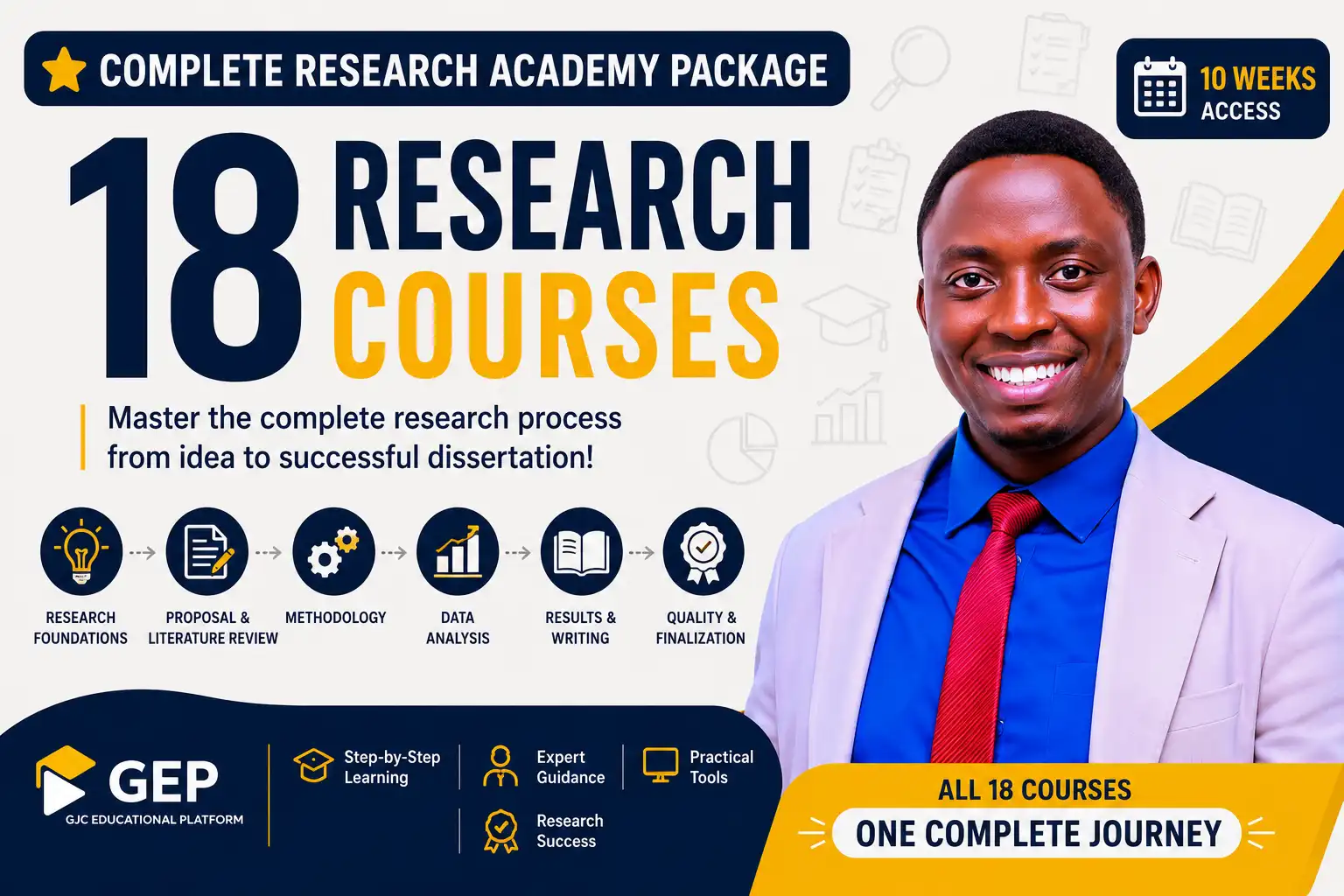
Buy this course in package

MAJOR CATEGORIES
PRIMARY COURCES (P.L)
SECONDARY COURSES (O.L)
ADVANCED COURSES
RESEARCH & DISSERTATION
SUBJECTS CATEGORIES
Get unlimited access to all learning content and premium assets Membership Pro
🧠📚 Chapter Five: Discussion, Conclusions & Recommendations
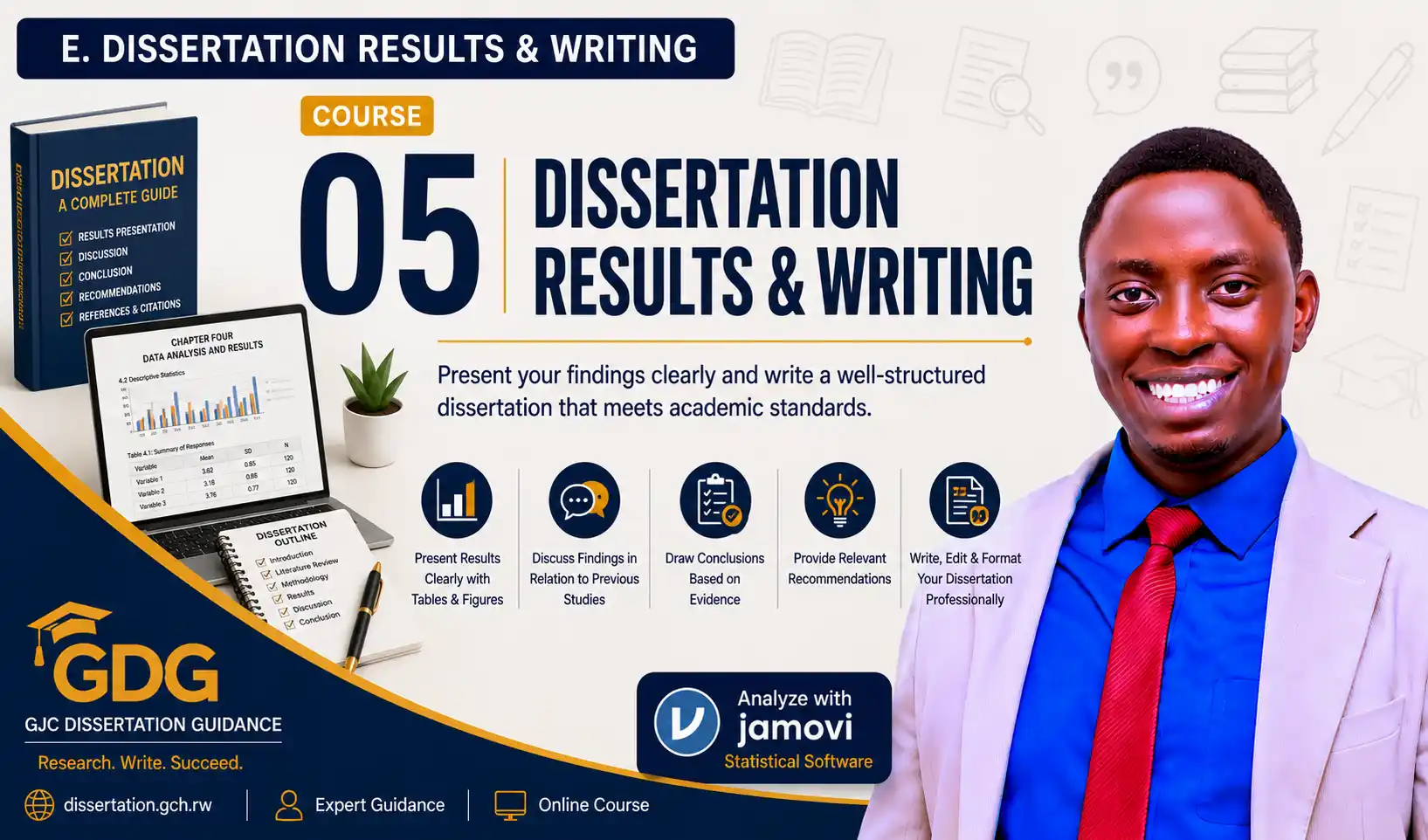
Welcome to Chapter Five: Discussion, Conclusions & Recommendations, the course that helps researchers move beyond reporting results to explaining what those results mean, how they relate to previous research, and what can reasonably be concluded from the study.
While Chapter Four focuses primarily on presenting and interpreting the evidence obtained from the data, Chapter Five requires the researcher to think more deeply about the meaning and contribution of those findings. Learners will develop the ability to discuss findings according to the research objectives, compare them with previous studies, explain similarities and differences, relate findings to relevant theories, and develop conclusions supported by the evidence.
The course also guides learners in developing evidence-based recommendations, identifying limitations of the study, explaining contributions to knowledge, and suggesting areas for further research.
The AUCA Research Manual specifically identifies summary of theoretical and empirical findings, conclusion, recommendations, contribution to knowledge, limitations of methodology, and suggestions for further studies as key components of Chapter Five. The manual further identifies conceptual, methodological, empirical, and theoretical contributions to knowledge as distinct areas that may be addressed.
Learners will use the actual findings developed in Course 14 as the starting point for their Chapter Five.
The practical process is:
FINDING → COMPARISON → EXPLANATION → CONCLUSION → RECOMMENDATION
Learners will progressively discuss each research objective, compare their findings with previous studies, develop conclusions, identify contributions and limitations, and formulate appropriate recommendations.
By the end of the course, the learner should have a complete draft of Chapter Five.

Get unlimited access to all learning content and premium assets Membership Pro

We use cookies to improve your experience, including essential cookies required for the website to function. By continuing, you agree to our use of cookies. Learn more.
We use cookies to help you navigate efficiently and perform certain functions. You will find detailed information about all cookies under each consent category below.
Necessary cookies are required to enable the basic features of this site, such as providing secure log-in or adjusting your consent preferences. These cookies do not store any personally identifiable data.
Analytical cookies are used to understand how visitors interact with the website. These cookies help provide information on metrics such as the number of visitors, bounce rate, traffic source, etc.
Advertisement cookies are used to provide visitors with customised advertisements based on the pages you visited previously and to analyse the effectiveness of the ad campaigns.
Functional cookies help perform certain functionalities like sharing the content of the website on social media platforms, collecting feedback, and other third-party features.
Not a member yet? Register now
Are you a member? Login now